

『Krohne Magnetic Flow Meter Manual Archive: Operational checkups for Flanged Process Sensors』Related information(clamp on meter|electromagnetic meter|venturi meterrotameter|orifice meter|ultrasonic flow meter|mass flow meter|coriolis mass flow meter|coriolis flow meter|magnetic flow meter|magmeter flow meter|magflow flow meter|mag meter flow meter|electromagnetic flow meter|vortex flow meter|turbine flow meter|thermal mass flow meter|thermal flow meter|rotameter flow meter)
Krohne Magnetic Flow Meter Manual Archive: Operational Checkups for Flanged Process Sensors
Quick Answer: A flanged magmeter sensor needs three checks before startup. Inspect the liner, electrodes, and grounding rings. Then verify wiring and full pipe condition. If these pass, the 4-20 mA HART output is reliable for water, wastewater, chemicals, and food fluids.
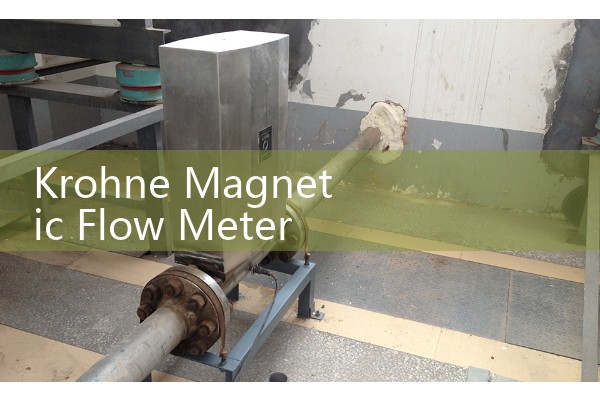
The Krohne magnetic flow meter manual archive is a good field reference for flanged process sensors. Many maintenance teams in Southeast Asia and the Middle East use it before online startup. We follow similar checks at Silver Automation Instruments. Our flanged magmeters use the same process connection logic as the Krohne units found in water plants and chemical sites.
Why Flanged Process Sensors Need a Physical Check First
Flanged sensors sit between pipe flanges and carry process pressure. A small liner defect or loose ground ring can cause unstable readings. We have seen this on customer sites many times. In a water utility in the Philippines, a DN150 flanged sensor read 8 percent high after a gasket slipped into the flow path. The fix was simple but only found during a shutdown inspection.
Liner and Electrode Inspection for Flanged Sensors
Open the sensor at one flange or use a borescope if the line cannot be drained. Check the liner type first. PTFE and PFA liners handle vacuum and aggressive chemicals but can blister after steam cleaning. Hard rubber liners handle abrasive slurry but can swell in high temperature. The electrode tips should be clean. A thin oil film or scale layer can add resistance and create drift. Clean with a soft cloth and mild detergent. Do not use a metal scraper.
Check the gasket inner diameter. It must match the pipe ID within 1 mm for DN50 and larger. If the gasket intrudes into the flow stream, the meter will read high. This is common on flanged magmeters in chemical plants in Saudi Arabia.
Grounding Rings and Flange Bolt Checks
Flanged electromagnetic flow meters need a solid ground reference. Use grounding rings when the pipe is lined or made of plastic. 316L rings work for most water and wastewater. Titanium rings work for seawater and acidic brine. If the process has cathodic protection, use a grounding electrode instead.
Tighten flange bolts in a cross pattern according to ASME B16.5 or EN 1092-1. Uneven torque can warp the liner face. For DN80 PN16, typical torque is 30 to 45 Nm depending on gasket type. Recheck after first thermal cycle.
Electrical Checks Before Startup
Open the terminal box on the sensor or remote transmitter. Check the coil cable shield. It should be grounded at one end only. The electrode cable insulation should read above 100 Mohm at 500 V DC. A lower value points to moisture inside the conduit or sensor housing.
For a Silver Instruments S-MAG 3100F flanged sensor, the coil resistance is normally 40 to 80 ohm for DN25 and 20 to 40 ohm for DN100. This range varies by manufacturer. The exact value is in the sensor nameplate or manual archive. Compare phase to phase and against the factory value.
Wet Checks and Process Condition Limits
Fill the pipe completely. The empty pipe alarm should clear. If the fluid conductivity is below 5 microsiemens per cm, t
Check the pressure and temperature against the liner limits. PTFE liners should not exceed 120 to 150 degrees Celsius at low pressure. Hard rubber liners should stay below 80 degrees Celsius in most cases. A paint manufacturer in Vietnam ran a DN50 PTFE sensor at 4 bar and 135 degrees Celsius. The liner deformed after six months. We replaced it with a PFA liner and the issue stopped.
Common Flanged Sensor Faults and What They Mean
Negative flow with no flow. This usually means the electrode cables are reversed or the ground ring is missing.
Flow reading jumps during pump start. This often comes from variable frequency drive noise on the same power line. Use a separate 24 V DC supply or add a line filter.
Flow reads low by 3 to 10 percent. Inspect for gasket intrusion, liner swelling, or a partially closed upstream valve.
Flow reads high. Check for air bubbles after a pump or a partially full pipe. Mount the sensor in a low point or install a back pressure valve.
Recommended Silver Instruments Flanged Magnetic Flow Meter
For most water, wastewater, chemical, and food plant applications, we recommend the Silver Instruments S-MAG 3100F flanged electromagnetic flow meter. It covers DN15 to DN600 with PTFE, PFA, or hard rubber liners. Electrode options include 316L, Hastelloy C, and titanium. Accuracy is 0.2 percent of reading. Outputs include 4-20 mA HART, pulse, and RS485 Modbus. Process pressure ratings are PN16 to PN40 with optional higher pressure on request.
We keep spare sensors for DN25, DN50, DN80, DN100, and DN150 in our warehouse. Larger sizes ship from our China factory. Lead time is 5 to 10 days for standard flanged units.
FAQ
What is the first check for a flanged magnetic flow meter sensor?
Inspect the liner and electrodes. Look for cracks, blisters, or coating. Then check grounding rings and gasket alignment.
How do I know if grounding rings are needed?
Use grounding rings when the pipe is lined, non-conductive, or has cathodic protection. 316L works for most water. Titanium is better for seawater and chlorinated brine.
What causes a flanged magmeter to read negative flow with no flow?
Reversed electrode cables or a missing ground reference cause negative readings. Check the terminal wiring and install grounding rings if needed.
Can I use a Krohne manual procedure for Silver Instruments sensors?
Yes for general inspection steps. The physical checks are similar. But use the Silver Instruments sensor data for resistance values and torque settings.
What information do I need to send for a flanged magmeter quote?
Send us your pipe size (DN), pressure (bar), temperature (°C), flow range, fluid type, and conductivity. That is enough for a fast quotation.
For a flanged electromagnetic flow meter price, send your pipe size (DN), pressure (bar), temperature (°C), and flow range. Contact Silver Automation Instruments at Tel: +86-25-68650347, WhatsApp: +86-25-52155837, or WeChat: +86 15365082610. We support customers in the Philippines, Vietnam, Indonesia, Saudi Arabia, Mexico, Brazil, and Australia.
 Hot News
 Related AD