

『Kerosene Flow Meter 1 Inch Local Display Module Setup』Related information(clamp on meter|electromagnetic meter|venturi meterrotameter|orifice meter|ultrasonic flow meter|mass flow meter|coriolis mass flow meter|coriolis flow meter|magnetic flow meter|magmeter flow meter|magflow flow meter|mag meter flow meter|electromagnetic flow meter|vortex flow meter|turbine flow meter|thermal mass flow meter|thermal flow meter|rotameter flow meter)

Kerosene Flow Meter 1 Inch with Local Display: Setup and Easy Configuration
Quick Answer: The Silver Instruments 1 inch kerosene flow meter uses an oval gear measuring unit with a built‑in local display module. It gives you direct volume total and flow rate in litres or gallons on a bright 5‑digit LCD. No external flow computer is needed for basic batching or fuel transfer logs. Supply 12–24 VDC to the display and it starts reading immediately. Send us your flow range in L/min, kerosene temperature, and pipe DN for a same‑day price and datasheet.
Why an Oval Gear Meter Fits Kerosene Better Than a Turbine
Kerosene viscosity sits around 1.5 cP at 20 °C. That is thin but not water. A turbine meter works, until the temperature drops 10 degrees and the turbine bearing drag shifts. We replaced a turbine on a kerosene filling skid in Johor, Malaysia last year. The customer ran a paint thinner blending line. Their batch logs drifted by 0.8% in the morning when the shed was cold. An oval gear meter ignores that small viscosity swing. It traps a fixed volume of liquid between two stainless steel rotors and a precision honed chamber. The output pulse train stays true, batch after batch.
What You Get in the Box for a 1 Inch DN25 Meter
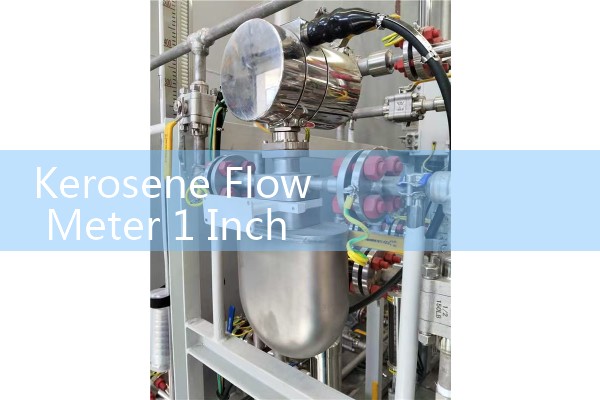
Every 1 inch kerosene flow meter set ships with a calibrated meter body, the local display module already mounted and rotated to face the operator, a PT100 ready port if you ordered temperature compensation, a calibration certificate traceable to a master meter, two BSP or NPT mating flanges, and a quick‑start wiring card. The rotor material is 316 stainless steel. The housing is anodized aluminium with a PTFE gasket. Everything is good for kerosene, diesel, or light fuel oil straight out of the crate.
Four‑Step Setup: From Unpacking to Full Batch Logging
Step 1. Bolt the meter into a horizontal pipe run. Keep 5 × DN straight pipe upstream if you have a control valve, otherwise 3 × DN is enough. The arrow on the body must point in the flow direction. Step 2. Open the display cover and land two wires for 24 VDC power. If you need a pulse output, land the open‑collector NPN wires to your PLC or batching controller. The terminal block is labeled 1, 2, 3. Electricians in Nigeria and Vietnam told us the silk‑screened diagram is clearer than a manual. Step 3. Apply power. The screen wakes up showing “88888” for one second, then jumps to a live totaliser. You are already measuring. Step 4. Press the red magnet button behind the faceplate three times to enter the setup menu. Set the flow unit to L/min or Gal/min, the K‑factor value from your calibration sheet (for example, 248.5 pulses per litre), and the 4‑20 mA span if you ordered an analogue output. Most engineers skip the dead‑band setting. Leave it at 0.1 Hz unless you are filling very small containers.
Real‑World Detail That Matters on a Customer Site
The 1 inch oval gear meter handles a normal flow window of 2 to 10 m³/h. Below 0.5 m³/h you get a small error because the leakage gap becomes a bigger fraction of the trapped volume. We tell custome
Options That Turn a Basic Display Meter Into a Remote Monitoring Tool
The standard local display shows accumulated total and instantaneous flow rate without any external wiring. If you later want to send data to a PLC or a Silver Instruments paperless recorder, you can specify a scaled 4–20 mA output or a pulse output board at the time of order. The output update is 100 ms, fast enough for a small batching valve. ATEX Zone 2 certification is also available for kerosene loading bays where a gas cloud is unlikely but the area is classified. The certified version ships with a blue aluminum tag and an extra earth lug.
FAQ: Kerosene Flow Meter 1 Inch Local Display
Can this 1 inch meter also handle diesel and light crude oil?
Yes. The oval gear design works with any clean liquid between 0.5 cP and 2000 cP. We supply the same meter body for diesel filling in Tanzania and for hydraulic oil blending in Chile. Just confirm the fluid type when you order so we match the gasket material.
What happens if I run kerosene with a small amount of water?
The meter will still count volume, but water can accelerate rotor wear over time. A small y‑strainer with a 100‑micron mesh installed upstream solves the issue for most sites.
Does the local display need a 24 V battery backup to keep the totaliser?
No. The accumulated total is stored in non‑volatile memory. A power cycle does not reset it. Only a deliberate magnet reset or a remote reset input clears the batch total.
How long does the display setup take the first time?
About three minutes. The K‑factor is pre‑loaded at our factory if you give us the fluid type. On site, you only need to verify the unit selection and maybe adjust the damping filter.
Can I mount the meter vertically with kerosene flowing downward?
Yes. Vertical installation is allowed. You must ensure the pipe stays full of liquid at all times. For vertical downward flow, we add a small back‑pressure valve after the meter to eliminate siphoning, a lesson learned from a kerosene burner feed line in Lima.
Send us your expected flow range in L/min, the kerosene temperature (°C), your pipe size (DN), and whether you need pulse or 4–20 mA output. Write to our engineers directly with the subject line “Kerosene 1 inch display meter RFQ”. We return a detailed offer with a specific calibration certificate example within one working day.
 Hot News
 Related AD