

『Everydrop Wireless Irrigation Flow Meter Setup: Troubleshooting Signal and Leak Detection』Related information(clamp on meter|electromagnetic meter|venturi meterrotameter|orifice meter|ultrasonic flow meter|mass flow meter|coriolis mass flow meter|coriolis flow meter|magnetic flow meter|magmeter flow meter|magflow flow meter|mag meter flow meter|electromagnetic flow meter|vortex flow meter|turbine flow meter|thermal mass flow meter|thermal flow meter|rotameter flow meter)
Everydrop Wireless Irrigation Flow Meter Setup: Signal and Leak Detection Troubleshooting
Quick Answer: Weak radio placement, low battery voltage, and metal enclosures cause most wireless setup failures on irrigation flow meters. Leak detection works best when you compare live flow during closed valve periods against a baseline near zero. Send pipe size, flow range, pressure, and output signal to Silver Automation Instruments for a compatible meter quote.
Wireless Signal Troubleshooting for Irrigation Flow Meters
Most engineers skip radio placement during first commissioning. We have seen this on customer sites in Malaysia, Vietnam, and Chile. A wireless irrigation meter installed inside a steel pump shed often loses signal after a few days. The radio module cannot transmit through sheet metal and concrete walls without signal loss.
Place the antenna above the metal enclosure or outside the control cabinet. Keep the gateway or receiver within 100 meters for clear line of sight. If the site has trees, earth berms, or a pump house, reduce this distance to 40 or 50 meters. Use an antenna extension cable rated for outdoor UV exposure.
Check battery voltage under load. Many wireless meters stop transmitting when the terminal voltage drops below 2.9 volts. Replace the battery if the open circuit voltage reads 3.1 volts or lower. Confirm the meter is not in sleep mode. Some Everydrop units wake only when flow passes a set threshold such as 0.5 liters per minute.
Step by Step Setup Checks for Irrigation Flow Meter Systems
Install the flow meter on a straight pipe section. For an electromagnetic meter, allow 5 pipe diameters upstream and 3 pipe diameters downstream for stable readings. For a mechanical impeller meter, allow 10 straight diameters upstream because swirl from elbows affects accuracy more.
Select the right pipe size. A DN25 meter handles 0.5 to 15 cubic meters per hour on irrigation laterals. A DN50 meter suits mainline flow from 5 to 120 cubic meters per hour. Do not oversize the meter. Low flow through a large line often reads zero because the velocity stays below the meter cutoff.
Match the wireless output. Common options include 433 MHz radio, LoRa, NB-IoT, or pulse output paired with a separate telemetry unit. Set the pulse scaling correctly. For example, one pulse per 10 liters works on most mainline valves. If the receiver and the meter use different protocols, you will see data but no totalized volume.
Leak Detection Methods That Work in Irrigation Networks
Close all zone valves after the flow meter. Watch the live flow reading for 10 minutes. If the meter still shows more than 0.3 percent of the normal flow rate, investigate the line. A small leak of 0.2 L/min on a 50 mm mainline may lose 288 liters per day. That adds up across a 5 hectare orchard.
Compare totalized volume against expected crop water use. A drip irrigation block with 2000 emitters at 4 L/h uses 8000 liters per hour during a set. If the meter records 9 percent more over one week, look for cracked laterals, worn valve diaphragms, or a stuck flush valve.
Use a logger with 1 minute sampling. Spot checks miss leaks that occur only when a pump starts. In practice, a pressure spike opens a weak joint for a few minutes. The flow meter captures that if the logger stores data at high resolution.
When 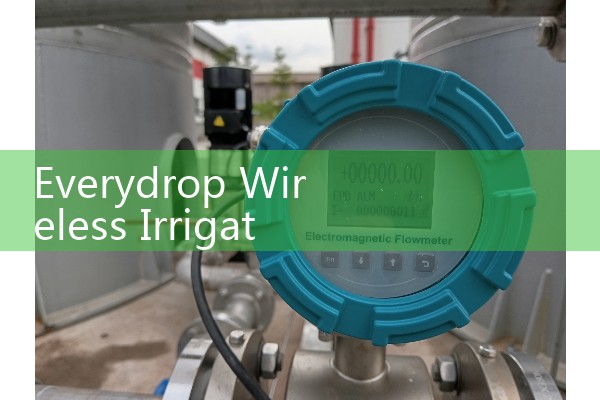
A plastic impeller meter may work for clean water but fails when sand or organic matter enters the line. We saw a palm oil irrigation customer in Indonesia replace three impeller meters in one season. The cause was fine grit from river water wearing the bearing. An electromagnetic flow meter has no moving parts and survives this duty better.
If the signal drops every day at the same time, suspect a radio channel conflict with a pump VFD or another farm telemetry device. Change the radio channel or add a low pass filter on the VFD output. If the meter passes a local display test but the remote reading is zero, the problem is the wireless link, not the sensor.
Silver Instruments Replacement Options for Irrigation Flow Monitoring
Silver Automation Instruments supplies electromagnetic flow meters and ultrasonic flow meters for irrigation districts, golf courses, and export farms. Typical models for pump stations and mainlines include the SIL-EMAG series in DN25, DN40, DN50, DN80, and DN100. Outputs include 4 to 20 mA, pulse, RS485 Modbus, and battery powered wireless options.
For fertilizer injection lines, a DN15 electromagnetic meter works well from 0.1 to 10 liters per minute. For multi-zone drip blocks, a DN40 meter with RS485 Modbus connects to a central logger. If you need to replace an Everydrop wireless irrigation flow meter, we need your pipe size, pressure, flow range, and the existing output wiring.
FAQ: Wireless Irrigation Flow Meter Setup and Leak Detection
Question 1: Why does my wireless flow meter show zero flow when the pump runs?
Answer: Check the flow velocity and the meter cutoff. If the pipe is oversized or the meter is an impeller type, low flow may not spin the rotor. Check battery voltage and confirm the transmitter is not in sleep mode.
Question 2: What is the normal straight pipe requirement for an irrigation flow meter?
Answer: Use 5 diameters upstream and 3 diameters downstream for electromagnetic meters. Use 10 diameters upstream for impeller meters. More straight pipe improves repeatability under swirling flow.
Question 3: How do I detect a small underground leak with a flow meter?
Answer: Close all zone valves and monitor live flow for 10 to 15 minutes. A residual flow above 0.3 percent of normal mainline flow indicates a leak. Use a data logger with 1 minute sampling for pressure spike related leaks.
Question 4: Can I use the same meter for clean water and fertilizer injection?
Answer: Yes, but match the material and flow range. For fertilizer, use an electromagnetic meter with EPDM or PTFE liner and 316L electrodes. For clean water, PVC or ceramic options are common.
Question 5: How do I send a request for a replacement flow meter?
Answer: Send your pipe diameter, flow range, pressure, process fluid, and output type to Silver Automation Instruments. Call +86-25-68650347 or WhatsApp +86-25-52155837. WeChat is +86 15365082610. A sales engineer will reply with a model and price.
Send us your pressure (bar), temperature (°C), pipe size (DN), and flow range. For wireless irrigation meters, include the radio type and power supply voltage. Contact Silver Automation Instruments at +86-25-68650347, WhatsApp +86-25-52155837, or WeChat +86 15365082610.
 Hot Blog
 Related AD