

『Coolant Flow Meter Automotive: Engine Auxiliary Chilled Fluid Tracking Tools』Related information(clamp on meter|electromagnetic meter|venturi meterrotameter|orifice meter|ultrasonic flow meter|mass flow meter|coriolis mass flow meter|coriolis flow meter|magnetic flow meter|magmeter flow meter|magflow flow meter|mag meter flow meter|electromagnetic flow meter|vortex flow meter|turbine flow meter|thermal mass flow meter|thermal flow meter|rotameter flow meter)
Coolant Flow Meter Automotive: Engine Auxiliary Chilled Fluid Tracking Tools
Quick Answer: An automotive coolant flow meter measures engine coolant, water-glycol blends, or auxiliary chilled fluid in test cells and battery thermal labs. Silver Instruments recommends Coriolis meters for mass flow accuracy and clamp-on ultrasonic meters for fast non-invasive checks. Send us your pressure (bar), temperature (°C), pipe size (DN), and flow range to get a matched model.
Why Engine Test Cells Need a Dedicated Coolant Flow Meter
Engine test benches do not need a rough estimate. They need a repeatable flow value because coolant flow affects heat rejection, engine calibration, and thermal balance calculations. A dyno cell in Thailand or a battery pack test lab in Vietnam usually measures coolant flow before and after the heat exchanger. The data goes straight into the test automation system.
One practical point. Many coolant loops operate at low flow during warm-up and high flow during full-load testing. A meter with a wide turndown ratio matters more than a generic industrial water meter. If you install a meter sized for maximum flow only, you lose accuracy during cold start tests. That is exactly when engine control engineers need stable data.
What You Are Really Measuring in Automotive Coolant Loops
A coolant flow meter for automotive engine auxiliary chilled fluid tracking tools sees more than water. The medium can be a 30 to 50 percent glycol mix, deionized water, or an inhibited glycol blend. The viscosity may sit between 1 and 8 cP depending on the temperature. The operating temperature often ranges from -20 °C to 120 °C. Pressure rarely exceeds 10 bar in small test cell loops, so the meter selection should focus on fluid compatibility and temperature response.
Because glycol mixtures change viscosity with temperature, a volumetric-only meter can drift on cold mornings. Mass flow meters do not need density compensation if you want true kilogram per hour values. That is why many test bench integrators pick a Coriolis meter for the primary coolant line and keep an ultrasonic clamp-on unit for field checks.
Sensor Options for Coolant Flow Meter Automotive Applications
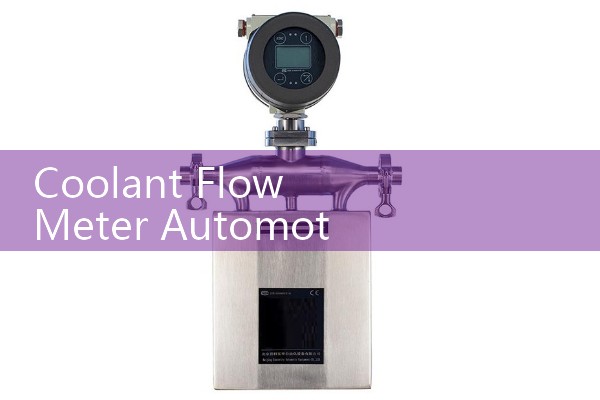
Silver Instruments offers several options. For mass flow, the SCF series Coriolis meter handles DN10 to DN25 coolant lines and gives direct mass flow, density, and temperature outputs. For non-invasive checks, the SUP series clamp-on ultrasonic meter mounts outside the pipe and works well on metal or plastic lines without cutting the loop. For conductive water-based coolant with no heavy oil content, an electromagnetic flow meter from the SEF series can be used, but you must confirm the conductivity of the mix.
Most engineers skip this part during the first RFQ. They give the nominal flow rate but not the minimum flow condition. The minimum flow often decides whether a Coriolis meter or an ultrasonic meter works. A clamp-on meter may lose signal at very low flow velocities below 0.1 m/s. A Coriolis meter still reads in that range if the line stays full.
Parameters That Matter in Engine Auxiliary Chilled Fluid Tracking
For an automotive coolant flow meter request, you should specify the fluid type, the water-glycol ratio, the operating temperature, the pipe diameter, and the flow range. A typical engine test cell line may be DN15 or DN20 with a flow range of 0.2 to 10 m3/h. A battery cooling loop may run at 0.5 to 5 m3/h with a temperature of 15 °C to 25 °C on the chilled side.
In practice,
Where We Have Seen These Meters Installed
We have supplied a DN15 Coriolis meter to an engine test bench builder in Bangkok. The loop ran a 40 percent glycol mix at 90 °C and the meter reported mass flow in kg/h. The customer compared the values against the facility thermal balance and found the offset under 1 percent after air elimination.
A different case was a battery cooling rig in Vietnam. The team needed to track chilled fluid consumption to confirm the chiller capacity. They used a clamp-on ultrasonic meter on a DN25 stainless pipe. After the installation team fixed air pockets, the readings became stable enough for cycle tests. We have seen this on customer sites many times. Air in the coolant loop causes more errors than the meter itself.
Typical Specifications and Model Matching
For a DN15 coolant line with a flow range of 0.1 to 3 m3/h, the SCF-015 Coriolis meter works well. For DN20 to DN25 lines up to 10 m3/h, we often select the SCF-020 or SCF-025. For clamp-on checks without process shutdown, the SUP-100 series covers pipe sizes from DN15 to DN100. Tell us the exact fluid, pipe material, wall thickness, and whether the line runs full. Those details affect the clamp-on signal more than the meter brand.
To get a quote, send your pressure (bar), temperature (°C), pipe size (DN), and flow range. Contact Silver Automation Instruments at Tel: +86-25-68650347, WhatsApp: +86-25-52155837, or WeChat: +86 15365082610. You can also check the coolant flow meter range at flow-meter.com.au.
FAQ: Coolant Flow Meter Automotive
Question 1: Which flow meter is best for engine coolant with glycol?
A Coriolis mass flow meter is the strongest choice. It reads mass flow directly and is not affected by the glycol ratio. A clamp-on ultrasonic meter is viable for diagnostics, but you need a full pipe and limited air entrainment.
Question 2: Can an electromagnetic flow meter measure automotive coolant?
It depends on the fluid conductivity. Some water-glycol blends are conductive enough, but deionized coolant or pure glycol is not. Confirm the mix and the minimum conductivity in µS/cm before ordering an electromagnetic meter.
Question 3: What size coolant flow meter do I need for an engine test cell?
Most engine test cells use DN15 to DN25 lines with flow from 0.5 to 10 m3/h. Share the minimum and maximum flow because a meter sized only on maximum flow may read poorly during warm-up.
Question 4: How do air bubbles affect coolant flow measurement?
Air pockets cause unstable readings, especially with ultrasonic and Coriolis meters. Install the meter in a vertical upward flow section or ensure back pressure to keep the line full. Air elimination upstream improves repeatability.
Question 5: Can I install a clamp-on ultrasonic flow meter on a hot coolant pipe?
Yes. Silver Instruments clamp-on meters can handle the common -20 °C to 120 °C range with the correct transducer set. You must verify the pipe outer diameter and wall thickness for accurate signal setup.
 Hot Blog
 Related AD