

 Current position > Product detail
『Inline Flow Meter for Water: Standard Residential and Commercial Processing Valves』Related information(clamp on meter|electromagnetic meter|venturi meterrotameter|orifice meter|ultrasonic flow meter|mass flow meter|coriolis mass flow meter|coriolis flow meter|magnetic flow meter|magmeter flow meter|magflow flow meter|mag meter flow meter|electromagnetic flow meter|vortex flow meter|turbine flow meter|thermal mass flow meter|thermal flow meter|rotameter flow meter)
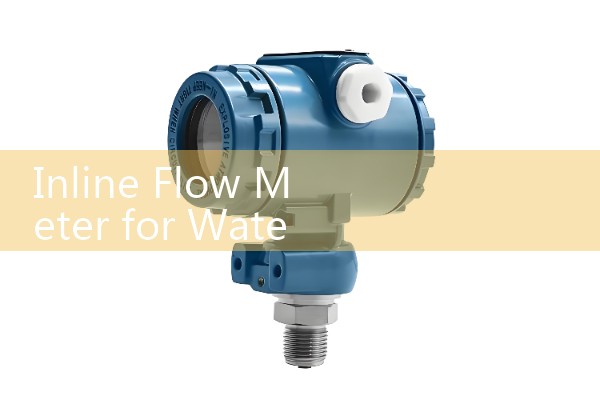
Inline Flow Meter for Water: Standard Residential and Commercial Processing Valves
Quick Answer: For inline water flow measurement in residential distribution and commercial water treatment, electromagnetic and clamp-on ultrasonic flow meters are the two main choices. A full-bore magmeter with PTFE liner handles potable water from DN15 up to DN200 without maintenance headaches. Clamp-on ultrasonic meters work well for large PVC or steel pipes where cutting the pipe is not practical. To select the right meter, you need to know the pipe size, typical and maximum flow, water quality, and the valve type installed upstream.
Residential complexes, office towers, and small water processing plants all rely on inline flow meters to track consumption, detect leaks, and dose chemicals. The meters sit between isolation gate valves, check valves, or butterfly valves without disrupting the water supply. Silver Automation Instruments supplies inline meters that meet local plumbing standards across Southeast Asia, the Middle East, and Australia.
Why Inline Flow Meters Replace Mechanical Turbine Meters on Standard Water Valves
Many older residential and commercial buildings still use Woltman-type or single-jet turbine water meters. These mechanical meters wear out quickly when sand, scale, or debris passes through the valve. Inline electromagnetic meters have no moving parts. The internal surface is a smooth PTFE or hard rubber liner that resists scaling and biofilm buildup. A utility in Malaysia swapped out 40 aging turbine meters with Silver Instruments inline magmeters on their main distribution lines. After two years, zero units needed recalibration.
Electromagnetic vs Ultrasonic: Which Technology Fits Your Valve Setup
Here is the thing. If your water has even minimal conductivity, typically above 5 µS/cm, an inline electromagnetic flow meter is the go-to solution. Even treated municipal water or bore water meets this threshold. These meters install between standard gate or butterfly valves and require short straight runs. A DN50 magmeter needs just 3D upstream and 1D downstream, which fits inside a compact building riser.
Clamp-on ultrasonic flow meters make sense when the pipe cannot be cut or shut down. Think of a 24-inch concrete pipe feeding a chiller plant in a Dubai hotel. We used a set of clamp-on transducers and a Silver Instruments wall-mount transmitter. The meter clamped onto the pipe outside the valve assembly and delivered ±1% accuracy without a single weld.
For most inline work with standard residential and commercial valves, we recommend the electromagnetic type. The cost is lower, and the accuracy is better at ±0.5% of reading.
Pipe Sizes, Flange Standards, and Straight Run Requirements
Commercial building water lines often use DN50, DN80, or DN100 pipes with PN16 flanges. Residential bulk meters typically sit on DN25 or DN40 lines. Silver Instruments inline magmeters come with ANSI 150, DIN PN16, or JIS 10K flanges to match local valve standards. The meter body is compact. A DN100 unit is just 250 mm face-to-face, so you can swap it into an existing spool piece between two flanged gate valves.
One detail that saves trouble during commissioning: always place the flow meter downstream of the check valve, not the other way around. A check valve flapper can disturb the velocity profile and cause unstable readings. We have debugged this on a site in Vietnam where the meter showed 15 percent low flow until the check valve was relocated.
Material Selection for Drinking Water and Chemical Dosing Lines
For potable wate
A Real-World Example: Hotel Water Reuse System in the Philippines
A mid-size hotel in Cebu City reuses gray water for toilet flushing and irrigation. The water passes through a sand filter and a chlorine dosing skid before entering the reuse tank. The operator needed an inline meter on the DN65 feed line, installed between two wafer butterfly valves. We supplied a Silver Instruments inline electromagnetic flow meter with a PTFE liner and 4-20 mA HART output. The unit talks to the building management system and logs the daily volume. After 18 months, the meter measures 120 cubic meters per day with a repeatability better than 0.2 percent.
How to Get a Quote Without Guessing the Model
Most engineers skip this part and just ask for a price list. In practice, giving us four data points gets you a solid proposal within 24 hours. Send us the pipe size (DN), maximum and typical flow, water temperature and pressure, and the type of valve installed immediately upstream (gate, butterfly, ball). Also mention if you need a local display or only a remote signal like 4-20 mA, pulse, or Modbus. Email [email protected] and the team will reply with a datasheet and a formal quotation.
Frequently Asked Questions
Can an inline flow meter work on PVC or HDPE pipes with plastic valves?
Yes. Electromagnetic flow meters with wafer or flanged connections can be sandwiched between plastic flanges using a backup ring. Clamp-on ultrasonic meters also work on plastic pipes without any contact with water.
What is the minimum conductivity for an inline magmeter?
Silver Instruments inline magmeters need a minimum of 5 µS/cm. Tap water, well water, and even lightly deionized water are well above this level. Only ultra-pure water like RO permeate may need a clamp-on ultrasonic meter.
Do you supply battery-powered inline water meters for sites without power?
Yes. We offer an inline electromagnetic meter with an integral battery pack that lasts 3 to 5 years. It is popular for remote residential bulk meters and agricultural water distribution in Africa and Southeast Asia.
How does a downstream butterfly valve affect accuracy?
If the valve is partially closed, the flow profile becomes distorted. We recommend installing the meter at least 5D upstream of the butterfly valve when the valve will modulate. For isolation valves that stay fully open, standard 3D upstream is enough.
Is a straight run length different for residential vs commercial installations?
Not really. The requirement depends on the upstream disturbance, not on the building type. We treat all installations equally. A DN25 meter in a house and a DN150 meter in a hotel plant room both obey the 3D upstream, 1D downstream rule.
For a quick discussion and a quote, reach us on WhatsApp at +86-25-52155837 or call +86-25-68650347. You can also add our WeChat: +86 15365082610 for field photos and installation tips. Silver Automation Instruments ships inline flow meters to Australia, the Philippines, Mexico, UAE, Nigeria, and more than 60 countries.