

 Current position > Product detail
『Oil Flow Meter Digital Display: Selecting Local Interfaces for Harsh Environments』Related information(clamp on meter|electromagnetic meter|venturi meterrotameter|orifice meter|ultrasonic flow meter|mass flow meter|coriolis mass flow meter|coriolis flow meter|magnetic flow meter|magmeter flow meter|magflow flow meter|mag meter flow meter|electromagnetic flow meter|vortex flow meter|turbine flow meter|thermal mass flow meter|thermal flow meter|rotameter flow meter)
Oil Flow Meter Digital Display: Selecting Local Interfaces for Harsh Environments
Quick Answer: A local digital display on an oil flow meter eliminates the need for a separate remote indicator and gives operators immediate readings in the field. For harsh environments, choose displays with IP67 or IP68 protection, ATEX Zone 1 or Zone 2 certification, and sunlight-readable LCDs. Silver Automation Instruments supplies oval gear, Coriolis, and turbine flow meters with built-in digital displays that survive offshore platforms, desert pipelines, and chemical injection skids.
Why a Local Digital Display Beats a Blind Transmitter
Oil flow measurements in remote wellheads, FPSO vessels, and truck loading stations often happen in places where a 4-20 mA signal goes to a control room far away. But the technician standing next to the meter needs to see the flow rate now. A blind transmitter forces the crew to carry a handheld communicator or walk back to a panel. A local digital display solves that in one device.
In marine fuel bunkering, the operator watches the display tick up in L/min while topping off a vessel. In a Nigerian crude pipeline, the local totalizer lets the field engineer verify batch volume without radioing the SCADA operator. The screen becomes the primary human interface. No extra wiring. No separate loop-powered indicator. Less failure points.
What Harsh Environments Really Mean for Displays
Harsh is not a vague word. It means salt spray eating through aluminium housings on an offshore platform in the Arabian Gulf. It means sandstorms in Saudi Arabia sandblasting a glass lens. It means daytime surface temperatures of 65 degrees Celsius on a West Australian mine site. It means condensed gas vapors that would ignite if a display produces a tiny spark.
Most engineers skip the fine print on temperature ratings. They buy a display that works on a bench at 25 degrees Celsius and then find it unreadable in direct desert sun. The LCD goes black. Or the plastic housing warps. We have seen this on customer sites in Oman and northern Chile more times than we can count.
The Four Specs That Actually Matter
One, IP rating. IP65 keeps out dust and low-pressure water jets, but in marine environments you want IP67 at minimum. Some of our oval gear meters ship with IP68 submersible displays because the meter sits inside a flooded pit. Two, hazardous area certification. ATEX, IECEx, or EAC marking. We provide Ex db or Ex ia options depending on whether you need flameproof or intrinsically safe. Three, temperature range. Look for an operating range of minus 20 to plus 60 degrees Celsius for most oil applications. For Middle East custody transfer in summer, go for minus 20 to plus 70. Four, display readability. A backlit LCD with wide viewing angle matters. Sunlight-readable display with a glass window, not a plastic film that scratches in a sandstorm.
How Silver Automation Instruments Builds Displays That Last
We sell flow meters that measure heavy fuel oil, diesel, crude, and lubricants. The digital display is not an afterthought. Our oval gear flow meter for oil will default to a mechanical register but we can mount an LCD display with a pulse output board behind the same housing. The display faces the operator directly, even if the flow meter is installed in a tight pipe run below a skid. The housing is stainless steel 304 or 316L. The glass is tempered. The cable gland entries are M20 with proper sealing.
Our Coriolis mass flow meter for fuel oil custody transfer comes with a local display that shows mass flow, density, and tempe
Selecting Between Integral vs. Remote Display
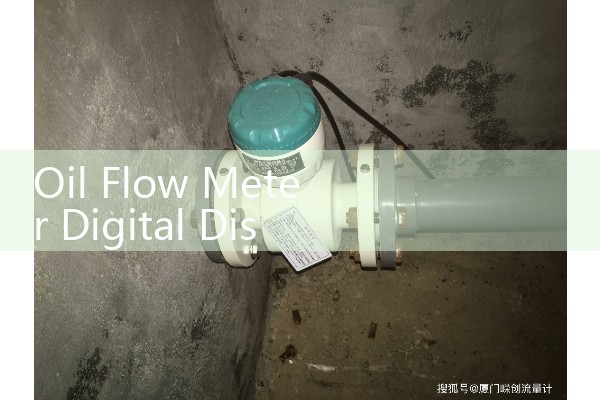
An integral display mounts directly on the sensor. It saves installation cost and works for most 1-inch to 4-inch oil pipelines where the meter is not buried under insulation. A remote display on a cable bracket suits installations where the meter is in a hot zone or a low-access trench. You can mount the display at eye level on a pole while the sensor stays inside a sump. We supply remote display cables up to 30 meters long.
Here is the thing: many engineers ask us to provide a dual-display setup where the local display is on the meter and a secondary display sits in a local panel 10 meters away. That duplication adds cost but removes single points of failure. Maintenance crews love it because they can cross-check readings without opening a junction box.
What We Recommend for Common Oil Applications
For truck loading gantry with diesel and jet fuel: choose our oval gear flow meter with a large-digit LCD totalizer and a reset button. Model series OGM-AL. For heavy fuel oil above 500 cSt you need the heated oval gear meter with a display that can show rate and total without lag. For crude oil pipeline monitoring use a turbine flow meter or Coriolis meter with an integrated display. The Coriolis option gives you multi-parameter display and is ATEX Zone 1 ready.
We also retrofit older mechanical meters with digital display heads. If you have a legacy positive displacement meter from another brand, we can often match the pulse output to one of our digital display units. Send us the pulse resolution (pulses per liter) and we will suggest a compatible display head.
Getting a Quote and Technical Proposal
Send us your pipe size (DN), fluid type, viscosity range in cP, flow rate in L/min or kg/h, and the hazardous area classification of your site. We will propose a flow meter with the right digital display and certification. Reach us at Email: [email protected], Tel: +86-25-68650347, or WhatsApp: +86-25-52155837. Our team answers within the same business day.
Frequently Asked Questions
Q: Can the digital display survive direct sunlight in Abu Dhabi for 10 hours a day?
A: Yes. We use sunlight-readable LCDs with wide temperature compensation. These displays have been tested above 65 degrees Celsius ambient without blackening.
Q: Is the display glass or plastic?
A: Tempered glass window on most ATEX-rated models. Plastic lenses are only used on lightweight non-Ex field indicators for diesel dispensers indoors.
Q: Can I get a flow meter with a display that shows both mass and volume units?
A: Yes. Our Coriolis meters display kg/h, L/h, density, and temperature on a single screen cycle. You can lock the preferred display using the front panel buttons.
Q: What wiring do I need for the local display?
A: The display is loop-powered or battery-powered depending on the model. For 4-20 mA loop-powered displays, you just connect two wires. No external power supply needed.
Q: Do you supply replacement displays for existing flow meters?
A: Yes, we offer universal digital display heads that accept pulse, 4-20 mA, or NAMUR sensor inputs. Share your current meter make and model and we will propose a direct replacement.