

 Current position > Product detail
『Picture of nozzle flowmeter』Related information(clamp on meter|electromagnetic meter|venturi meterrotameter|orifice meter|ultrasonic flow meter|mass flow meter|coriolis mass flow meter|coriolis flow meter|magnetic flow meter|magmeter flow meter|magflow flow meter|mag meter flow meter|electromagnetic flow meter|vortex flow meter|turbine flow meter|thermal mass flow meter|thermal flow meter|rotameter flow meter)
When the nozzle is blocked, will the flowmeter also record the flow rate? When the nozzle is blocked, whether the flowmeter records the flow rate depends entirely on the installation position and detection principle of the flowmeter, and there are two typical working conditions.
Firstly, the flowmeter is installed upstream of the nozzle. At this time, the flowmeter detects the flow rate of the fluid flowing through its own upstream pipeline. If the nozzle is blocked, it will only limit the downstream fluids ability to pass through, but the upstream fluid will still flow through the flowmeter normally. The flowmeter will continue to output the current upstream fluid flow rate value, and only the effective output flow rate at the actual terminal (downstream of the nozzle) will be significantly reduced or even completely zero.
. For example, in the industrial spraying car cluster system, when the spray gun nozzle is blocked, the upstream installed gear flowmeter will still record the flow rate of the paint pump, but the spray gun cannot output the material normally. Secondly, the flowmeter is installed downstream of the nozzle. At this time, the flowmeter detects the fluid flow after passing through the nozzle. If the nozzle is blocked, the downstream fluid cannot flow normally, and the flowmeter will detect that the flow is approaching zero or there is no flow output directly. For example, in small hydraulic branches, the vortex flowmeter installed downstream of the throttling nozzle will directly display no effective flow after the nozzle is blocked. Additional attention should be paid that nozzle blockage in high-pressure fluid systems can lead to abnormal upstream pressure rise, and there is a risk of pipe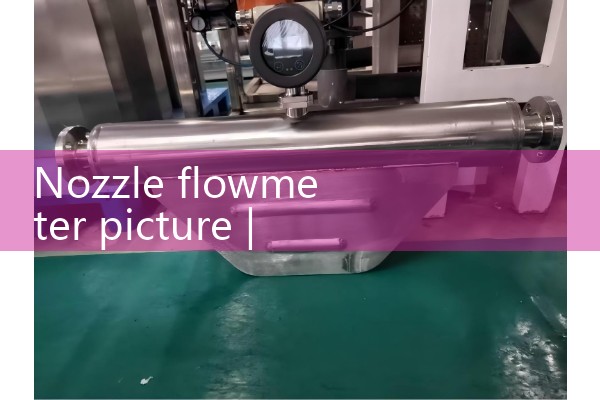
2. What are the differences between nozzle flowmeter and orifice flowmeter
Abstract: Nozzle flowmeter is a widely used differential pressure flowmeter, mainly used to measure the flow rate of various fluids in pipelines. It has the advantages of long history of use, high standardization, reliable measurement data, and simple and firm structure. However, the manufacturing cost of nozzle flowmeter is relatively high, so it is generally used as a standard.
. Both nozzle flowmeter and orifice flowmeter belong to differential pressure flowmeter, with similar principles and applications, but the main differences are in energy efficiency and accuracy level. Lets take a look at the nozzle flowmeter below.1. Characteristics of nozzle flowmeter: The nozzle flowmeter is a differential pressure generating device for measuring flow, mainly used in conjunction with various differential pressure gauges or transmitters to measure the flow of various fluids in pipelines. It is widely used in industries such as petroleum, chemical, metallurgy, power, and light industry.
.1、 The advantages of nozzle flowmeter are that it has a long history of use, a large amount of experimental data, and comprehensive international and national standards. It has rich experience in design, manufacturing, and application, high standardization, and does not require real flow calibration. The measurement data is authentic and reliable; In addition, the nozzle flowmeter has a simple and sturdy structure, no movable parts, and is stable and reliable for long-term use.