

 Current position > Product detail
『Velocity area method flowmeter』Related information(clamp on meter|electromagnetic meter|venturi meterrotameter|orifice meter|ultrasonic flow meter|mass flow meter|coriolis mass flow meter|coriolis flow meter|magnetic flow meter|magmeter flow meter|magflow flow meter|mag meter flow meter|electromagnetic flow meter|vortex flow meter|turbine flow meter|thermal mass flow meter|thermal flow meter|rotameter flow meter)
How to calculate the flow rate of tap water?
The calculation of tap water flow can be carried out through the following methods:
Firstly, the velocity area method is the most direct and commonly used flow calculation method, especially suitable for pipeline fluids.
. The volumetric flow rate Q can be calculated by multiplying the flow velocity v and the cross-sectional area A of the pipeline, that is, for a circular pipeline, the cross-sectional area A can be calculated using the formula A=π r ², where r is the radius of the pipeline. Therefore, the calculation formula for flow Q can be converted as: Q=π r ² × v, or if the diameter d of the pipeline is known, r=d/2, so: Q=π (d/2) ² × v=π d ²/4 × vSecondly, Mannings formula is a flow calculation formula applicable to river hydrodynamics. Its expression is: Q=(1/n) A R ^ (2/3) S ^ (1/2), where Q represents water flow rate; N represents Mannings coefficient, which is a dimensionless parameter reflecting the roughness of a pipeline or river; A represents the cross-sectional area; R represents the hydraulic radius, which is the difference between the energy per unit weight of water at a certain point on the water flow cross-section and the average energy per unit weight of water at the cross-section; S represents the slope of the water flow, which is the ratio of the height change in the direction of the water flow to the horizontal distance.
Thirdly, the volumetric method measures the amount of water flowing through a certain section over a certain period of time, and then calculates the ratio of water volume to time to obtain the flow rate.
. The formula is: Q=V/t, where V is the volume, which is the volume of water flowing through a ce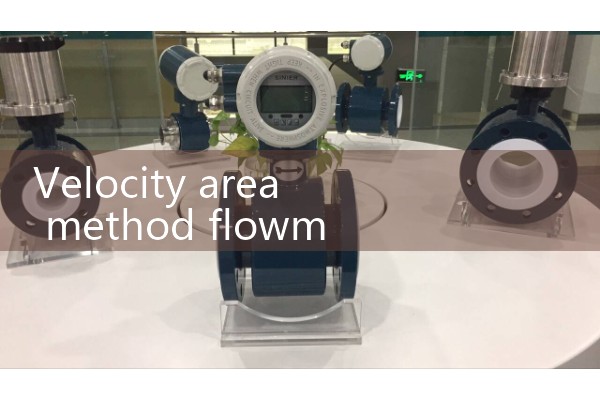
Fourth, flowmeter method. The flowmeter method uses a specialized flowmeter to measure flow rate.
. These flow meters include electromagnetic flow meters, ultrasonic flow meters, etc., which measure the flow velocity or flow rate of fluids through different principles. This method is usually more accurate and convenient, especially suitable for situations that require long-term, continuous monitoring of traffic.Fifth, consider pressure loss in the process of conveying water flow through pipelines. Due to the frictional force of the pipeline wall and the resistance of the water flow, pressure loss of the water flow can occur.
. The calculation formula for pressure loss is: Δ P=f (L/d) (v ²/2g), where Δ P represents pressure loss; F represents the coefficient of friction, which is related to factors such as pipeline material and roughness of the inner wall; L represents the length of the pipeline; D represents the diameter of the pipeline; V represents the velocity of water flow; G represents the acceleration due to gravity. In practical applications, it is also necessary to consider factors such as fluid temperature, density, and pressure, which can affect the accurate measurement of flow in the world. Therefore, when choosing a specific flow calculation method, it should be based on the actual situation and needs, and necessary corrections and adjustments should be made according to the site conditions. In summary, the calculation of tap water flow can be carried out through various methods such as velocity area method, Mannings equation, volumetric method, and flow meter method. In practical applications, appropriate calculation methods should be selected ba