

 Current position > Product detail
『Safety Standards and Material Selection for a Flow Meter for Petrol』Related information(clamp on meter|electromagnetic meter|venturi meterrotameter|orifice meter|ultrasonic flow meter|mass flow meter|coriolis mass flow meter|coriolis flow meter|magnetic flow meter|magmeter flow meter|magflow flow meter|mag meter flow meter|electromagnetic flow meter|vortex flow meter|turbine flow meter|thermal mass flow meter|thermal flow meter|rotameter flow meter)
Safety Standards and Material Selection for a Flow Meter for Petrol
Quick Answer: For petrol (gasoline) metering, always select a flow meter with ATEX or IECEx certification for Zone 1 or Zone 2, depending on your site classification. Stainless steel (316L) wetted parts with PTFE or PFA seals are standard. If your system operates under high pressure, specify PN 40 or PN 63 flanges and confirm the meter’s temperature rating up to 60°C minimum.
You are standing in front of a loading skid at a fuel terminal in Surabaya, Indonesia. The pump is ready, the truck is in position, and the batch controller is waiting for a flow total. But the flow meter you installed six months ago is already showing erratic readings. The seals are swelling. The bearings sound rough. The local inspector has refused to sign off the metering system because it lacks an ATEX plate. This kind of failure is expensive. It is also avoidable.
Petrol is not just another liquid. It is a volatile, flammable hydrocarbon with low viscosity (typically 0.4 to 0.8 cP at 20°C) and a high vapour pressure. It dissolves many elastomers, attacks aluminium, and can generate static charge. Add a flow velocity of 3 to 5 m/s in a DN40 pipe and you have a real mixing of mechanical stress, chemical aggression, and explosion risk. The flow meter you pick must handle all three.
Explosion protection: the non-negotiable starting point
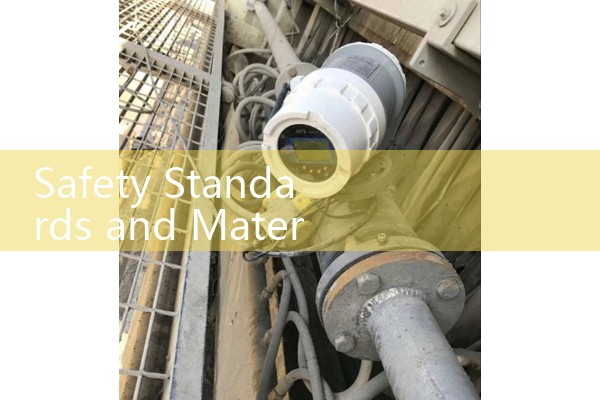
No reputable engineer installs a petrol flow meter without certified explosion protection. The baseline is ATEX Directive 2014/34/EU or the IECEx scheme. Most petrol storage, blending, and custody transfer areas fall under Zone 1 (gas present occasionally during normal operation) or Zone 2 (gas present only under abnormal conditions). Meter electronics usually need at least Ex d (flameproof) or Ex ia (intrinsic safety) rating. At Silver Automation Instruments we normally supply flow meters marked II 2G Ex d IIC T4 for Zone 1 applications. For remote-mounted transmitters in safe areas, the sensor itself might only need a simple Ex certification, but never assume. We have seen sites in the Middle East where local regulations demand dual ATEX and IECEx certificates on the same nameplate, even if the engineering standard says one is enough. Check with your local authority early.
Material selection: what touches the petrol
Petrol is a strong solvent. It leaches plasticizers, softens standard NBR seals, and corrodes aluminium alloys. In our repair workshop we have opened oval gear meters that came back from field service after just eight months. The aluminium rotors had pitted surfaces. The injected carbon graphite bearings were sludged. The body gasket had turned into a gummy paste. When we asked, the customer told us they were pumping standard unleaded petrol with up to 10% ethanol. That ethanol fraction is aggressive enough to eat incompatible materials fast.
The safe material list for petrol is well defined. Wetted parts should be stainless steel 316L (1.4404) or better. Housing, measuring chamber, gears, shafts, all in 316L. For sealing, use PTFE (virgin or glass-filled) or PFA-encapsulated O-rings. Some engineers accept FFKM (Kalrez) for dynamic seals, but it is often overpriced for standard petrol unless your stream contains aggressive additives like MTBE at high concentration. Avoid FKM (Viton) if the ethanol content exceeds 5%, because FKM swells noticeably with alcohol-blended fuels. We have seen fuel depot operators in Brazil, who regularly handle hydrated ethanol, standardize on PTFE-lined oval gear meters or Coriolis meters with all-welded 316L tubes and no internal gaskets at all.
For meter types, oval gear positive displacement meters are still the workhorse in truck loading and small custody transfer because they handle low flows (down to a few litres per hour on a DN15 meter) and maintain high accuracy (typically ±0.5 % of reading or better). The key is to specify the meter with 316L internals from the start. Silver Instruments supplies oval gear flow meters in sizes from DN4 up to DN80 with 316L bodies and PPS + graphite bearings specifically for petrol and light fuel oil. The standard pulse output is a two-wire NAMUR sensor that can connect directly to a batch controller like a Contrec or an OMNI flow computer.
Vapour pressure, cavitation, and back pressure
Petrol has a Reid vap
Signal and communication in hazardous areas
Most petrol flow meters in industrial use output a frequency signal proportional to flow. The standard we supply with oval gear and turbine meters is a dual-channel NAMUR sensor (EN 60947-5-6) that can be connected via intrinsically safe isolators to a PLC or flow computer. If the customer needs 4-20 mA HART, we integrate a loop-powered transmitter that sits in the safe area or in an Ex d enclosure directly on the sensor. For Modbus RTU or digital total, we typically pair the NAMUR pulses with a remote flow totalizer. Do not send unprotected high-level logic into the zone unless it is inside a certified enclosure. It sounds obvious, but we regularly receive inquiries where a site engineer wants a Bluetooth dongle on the meter in Zone 1. There is simply no compliant way to do that today without a full risk assessment.
Real installation tests and our standard build
Last year, a small lubricant blending plant in Vietnam approached us. They were batching petrol-based solvent into 200-litre drums using a manual filling gun. Their old meter was a turbine with aluminium body that had started leaking at the threaded joints after 14 months. They needed a direct replacement with ATEX certification and a built-in mechanical totalizer plus pulse output for a secondary PLC counter. We supplied a DN20 oval gear flow meter with 316L body, PTFE O-rings, NAMUR sensor, and ATEX zone 2 rating. The meter was factory calibrated with petrol-equivalent solvent (Exxsol D60) at 20°C. Accuracy after installation was 0.3 % of reading across four test batches. The local inspector accepted the ATEX certificate and material traceability within a week. The customer then ordered three more units for another filling line. The process was straightforward because we had pre-matched the material, the certification, and the flow range.
Standards you will reference in your specification
When writing a tendering spec, engineers typically cite OIML R117 (dynamic measuring systems for liquids other than water) and API MPMS Chapter 5 for custody transfer. For safety, EN 60079 series for explosive atmospheres applies. For materials, look at NACE MR0175/ISO 15156 if your petrol stream has any sour component (rare, but possible in some refinery intermediate streams). In Europe, MID (Measuring Instruments Directive) approval may be required for fiscal metering. If you are unsure which standard applies in your country, our application engineers can help. We usually ask for a one-page summary of your site’s hazardous area classification drawing and the data sheet of the liquid you are metering.
Final checklist before you order a petrol flow meter
We tell every customer to confirm seven points: pipe size and connection (DN, flange rating), minimum and maximum flow rate in L/h or kg/h, operating temperature and pressure, petrol composition including ethanol or methanol content if any, ambient temperature range at the meter location, zone classification with gas group and temperature class, and output signal preferred (NAMUR pulse, 4-20 mA HART, Modbus). Skipping even one can lead to a wrong recommendation.
If you are quoting a petrol metering system now, send us your pressure in bar, temperature in °C, pipe size in DN, and your flow range. Our engineers will reply with a specific model recommendation, a material compatibility statement, and the applicable ATEX or IECEx certificate within one working day.
Email: [email protected] | Tel: +86-25-68650347 | Whatsapp: +86-25-52155837 | WeChat: +86 15365082610
Visit our petrol flow meter section: www.flow-meter.com.au